 ESPCI web site



Design of polymer networks architectured by weak interactions
The mechanical performance of soft polymer networks, such as elastomers and hydrogels, can be significantly enhanced by incorporating attractive, non-covalent interactions between polymer chains. Unlike permanent covalent bonds, these weak interactions (e.g., hydrogen bonding, hydrophobic interactions, and electrostatic forces) provide a mechanism for reversible energy dissipation, leading to materials with exceptional toughness and adaptability. Our research focuses on the bottom-up design of networks where these interactions can be precisely tuned. By utilizing external stimuli—such as temperature, pH, or ionic strength—we control the assembly and disassembly of these bonds to create "intelligent" materials with responsive properties.
Key research areas:
– Toughening of networks by weak interactions (D.Hourdet, A.Marcellan, Y.Tran)
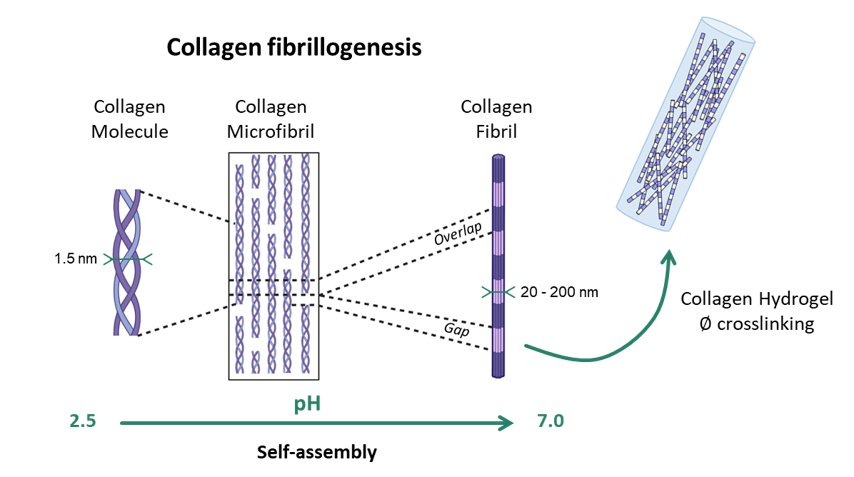
– Role of collagen self-assembly in mechanical properties (Mélina Motard, A.Marcellan, N.Pantoustier, L.Jørgensen)
– Biphasic gels (Loïc Démoulin, T.Merland, P.Perrin, D.Hourdet, C.Creton)