 ESPCI web site



In the frame of PIC lab (Laboratoire Commun Total/ESPCI/CNRS/Sorbonne Université) SIMM researchers explain for the first time a long-known effect: the formation of froths, i.e. foams with lifetimes of a few seconds, in mixtures of liquids. In everyday life, this effect is generally observed in oil mixtures, such as gasoline or frying oils. In contrast, pure oils do not foam because liquid films between bubbles thin down and break up so quickly that bubbles cannot be seen with the naked eye. In some liquid mixtures, film drainage is greatly slowed down, allowing the observation of froths. This effect has been measured and a quantitative explanation has been provided for it, based on the simple assertion that bulk and surface concentrations in each species slightly differ in the liquid films. This work in particular offers perspectives on the improvement of lubricants for electric cars, in which foaming is a major concern.
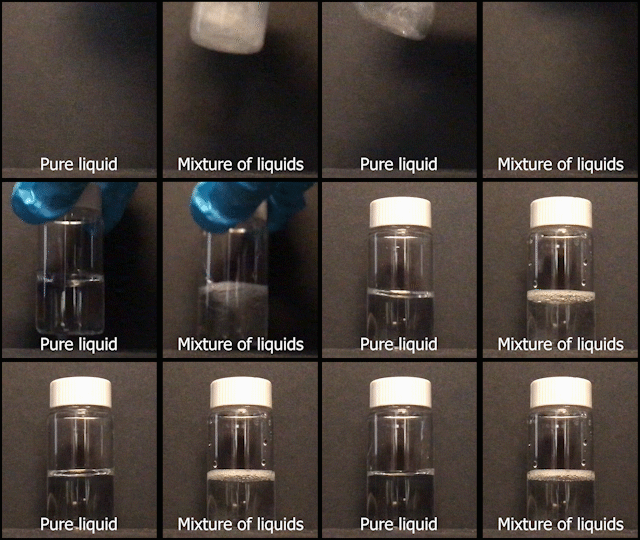
The publication has been selected as one of Editor’s Suggestions by Physical Review Letters and has been the object of a communication by CNRS and the American Physical Society.